 US Hwa Rang Kwan

Possibly, but results are mixed: some research suggests martial arts can help with self-control. In a 2013 pilot study of 60 middle-school students, a 9-month taekwondo program in PE classes led to greater parent-rated improvement in inhibitory control. A 2020 meta-analysis found a small positive effect of martial arts training on wellbeing. In Kumdo, the Korea Kumdo Association lists courtesy as the first purpose of the practice.
What does research say about self-control and confidence?
- 2013 pilot study (taekwondo in middle-school PE, 60 students, 9 months). Parent-rated inhibitory control improved more in the taekwondo group. It was a small pilot study.
- 2022 trial (taekwondo, 240 children aged 7 to 11). Teachers rated children in the taekwondo group as having fewer conduct problems and better attentional control. No effect was found for teacher-rated inhibitory control or prosocial behavior.
- 2020 meta-analysis (14 studies). Martial arts training had a small positive effect on wellbeing and no significant effect on aggression.
The studies used taekwondo or several martial arts, not Kumdo, so results may not carry over.
How does Kumdo practice teach discipline?
- Courtesy first. The Korea Kumdo Association's first purpose of Kumdo is courtesy, and its etiquette guide says Kumdo begins and ends with courtesy. Before a match, players bow to each other at 15 degrees.
- Respect in winning. Under the association's match rules, a point can be taken back if a player celebrates too much after a strike.
- Patience and focus. The association says Kumdo training builds concentration, patience, decisiveness and calm.
- Mindset. Its seven points of training mindset include learning Kumdo correctly and seriously and always working on self-cultivation.
How do rank goals help children?
Under the Korea Kumdo Association's rules, children under 12 start at 9th geup and move up step by step. Children aged 9 to under 13 can earn a junior 1st dan, and a junior 1st dan becomes a regular 1st dan at age 13 without a separate procedure. See Kumdo Ranks.
FAQ
Does martial arts teach kids discipline?
A small 2013 taekwondo study found greater parent-rated improvement in self-control. In Kumdo, the Korea Kumdo Association says practice begins and ends with courtesy.
Does martial arts build confidence?
A 2020 meta-analysis found a small positive effect of martial arts training on wellbeing.
Will martial arts make my child aggressive?
The 2020 meta-analysis found no significant effect of martial arts training on aggression, and a 2026 review of 11 studies found no consistent effect either way.
Kumdo for kids near Washington, DC
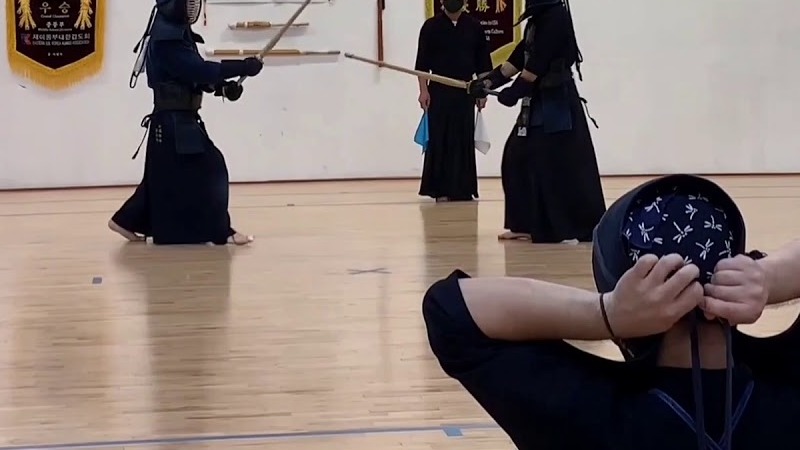
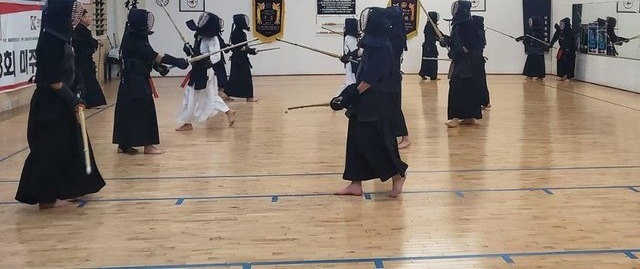
US Hwa Rang Kwan Kumdo teaches kids, teens and adults (ages 7 and up) in Chantilly, Virginia and Ellicott City, Maryland. New students at the Chantilly, VA dojang can start with 3 semi-private lessons for $19.99. For Ellicott City, please contact us before you visit.
Sources
- Taekwondo pilot in middle-school PE (Mental Health and Physical Activity, 2013)
- Taekwondo trial in children aged 7 to 11 (Developmental Psychology, 2022)
- Meta-analysis of martial arts and mental health (J Bodyw Mov Ther, 2020)
- Review of martial arts and aggression in youth (Front Public Health, 2026)
- Korea Kumdo Association: purposes of Kumdo
- Korea Kumdo Association: etiquette
- Korea Kumdo Association: training mindset
- Korea Kumdo Association: match and refereeing rules (PDF, 2023)
- Korea Kumdo Association: junior dan regulations (PDF)