 US Hwa Rang Kwan
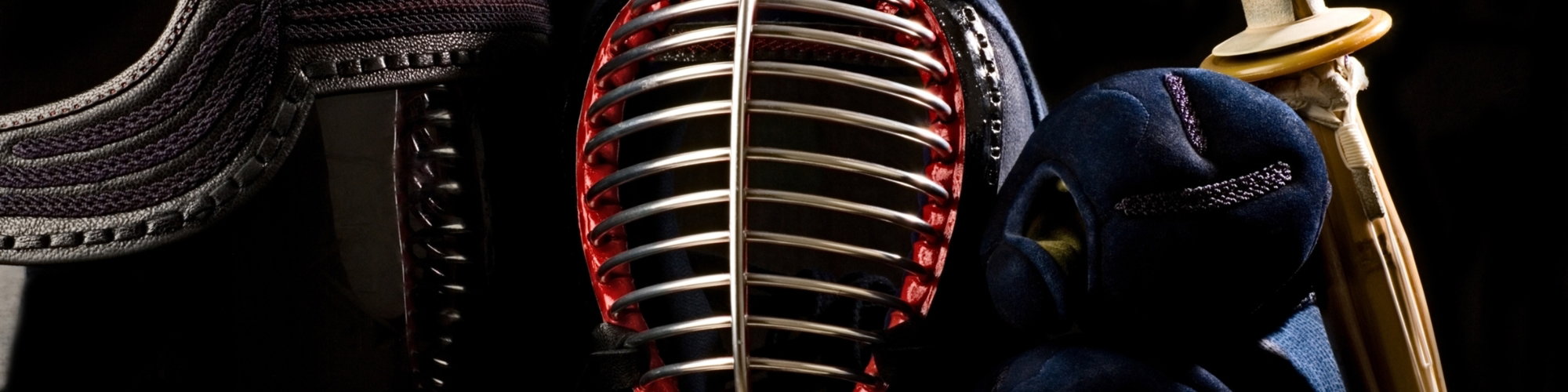
You can practice the basics of Kumdo at home: the grip, the middle stance (jungdan-se), the pushing step and the basic head strike. The Korea Kumdo Association describes each of these on its basic technique page. Use a jukdo (bamboo sword) or a mokgeom (wooden sword), give yourself room above and around you, and save sparring for the dojang, where you train in armor with an instructor.
The steps below follow the Korea Kumdo Association's description of basic technique.
Step 1: How do you hold a Kumdo sword?
- Put your left hand at the very end of the handle, with your little finger at the end.
- Close the little finger, ring finger and middle finger in that order. Rest the thumb and index finger lightly.
- Place your right hand just below the guard. The gap between your hands should be about one to one and a half fists.
- Hold lightly with the right hand.
Step 2: How do you stand in Kumdo?
The basic stance is the middle stance, jungdan-se (중단세). The Korea Kumdo Association calls it the most basic stance and the one used most in Kumdo.
- Step the right foot forward as you raise the sword into position.
- Keep the sword tip at the height of your own throat.
- Point the line of the sword tip between your opponent's eyes. At home, pick a spot on the wall at eye level.
Step 3: How do you move your feet?
The Korea Kumdo Association describes four kinds of footwork. The standard footwork for striking from one-step distance is the pushing step, mireo-geotgi (밀어걷기). For the basic strike, the left foot pushes off strongly and the right foot steps one step forward. Practice moving forward and back in your stance without lifting your feet high.
Step 4: How do you do the basic head strike?
- Start in the middle stance.
- Raise the sword with both hands.
- Push off with the left foot, step forward with the right foot and bring the sword down to the front of the head (jeongmyeon meori-chigi).
- Call out the target as you strike: "meori!" (head). The Korea Kumdo Association says the shout helps you encourage yourself and focus your energy.
- Bring the left foot up behind you and return to the middle stance.
The other basic strikes are the side head strikes, the wrist strike, the waist strike and the thrust. Learn those with an instructor.
How should you practice safely at home?
- Check the space above you and around you before you swing.
- Practice slowly. Clean form matters more than speed.
- Do not strike another person without armor and an instructor.
FAQ
Can I learn Kumdo at home?
You can practice the grip, stance, footwork and basic strike at home. Sparring needs armor and an instructor at a dojang.
Which hand goes at the end of a Kumdo sword?
The left hand, with the little finger at the end of the handle. The right hand holds just below the guard.
Which foot is forward in Kumdo?
The right foot, in the middle stance.
Why do Kumdo players shout?
The Korea Kumdo Association says the shout helps you encourage yourself and focus your energy. One method the Korea Kumdo Association describes is to call out the name of the target, such as "meori!" for the head.
Take the next step at a dojang
US Hwa Rang Kwan Kumdo teaches students 7 years and older in Chantilly, Virginia and Ellicott City, Maryland. New students at the Chantilly, VA dojang can start with 3 semi-private lessons for $19.99. For Ellicott City, please contact us before you visit. You can also watch our Kumdo videos.